Locations
Game of Thrones in Northern Ireland: a local's guide
The locations, the Studio Tour in Banbridge and the weather, from a tour leader who lives in County Down and has watched Westeros turn back into farmland, forest and beach.
Photo: Scenes Found
I grew up in Downpatrick, a few miles from Castle Ward, and I remember the summer the Game of Thrones trucks first came down the estate lanes. Nobody at home thought much of it. A fantasy show, filmed in a farmyard we used to visit on school trips. Ten years later, people fly in from Texas and Taiwan to stand in that farmyard, and I lead them there. These are the things I tell every guest before they arrive.
Why Northern Ireland?
The show was based in Belfast for its whole run. The crews worked out of Titanic Studios, in the old shipyard where the Titanic was built, and later out of Linen Mill Studios in Banbridge, about 25 miles south of the city. Because the production lived here, the location scouts looked at everything within a couple of hours' drive, and our coasts, castles and forests ended up standing in for half of Westeros. Interiors were built on stages, and exteriors were filmed at real places, most of which you can visit for the price of parking or a National Trust ticket.
The places worth your time
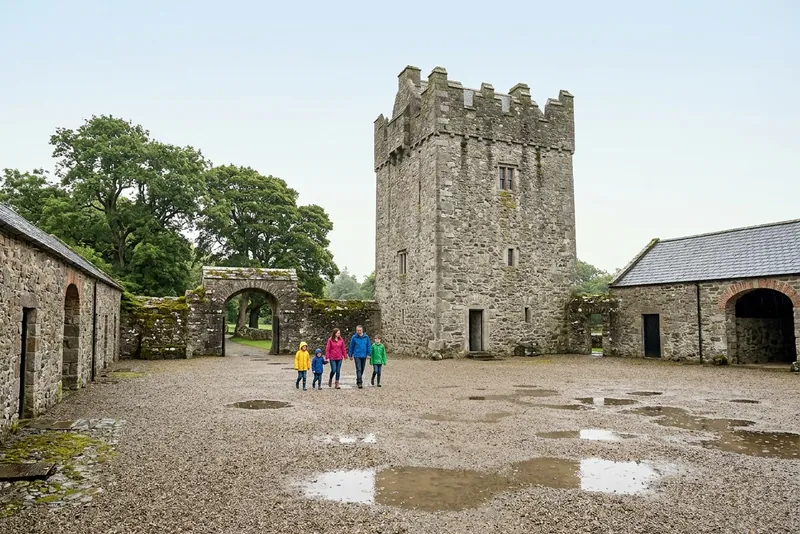
- Castle Ward. Winterfell in season one. The farmyard and the old tower house behind the big house are where King Robert rides in during the first episode. The estate charges entry, and it is lovely for a walk along Strangford Lough afterward.
- Tollymore Forest Park. Under the Mourne Mountains near Newcastle. The opening scene of the whole series was filmed in these woods, and so was the moment the Stark children are given their direwolf pups. Come for the old stone bridges over the Shimna River as much as for the show.
- Cushendun Caves. A short walk from the village harbor in the Glens of Antrim. This is where Melisandre comes ashore and gives birth to the shadow. The caves are free and open all year. The house next to them is someone's home, so please stay on the shore.
- Ballintoy Harbour. Lordsport on Pyke, in the Iron Islands. A tiny harbor at the bottom of a steep lane, white rocks and black rocks, and on a sunny day the bluest water in Ulster.
- Downhill Strand. The beach where Melisandre burns the Seven on Dragonstone. Mussenden Temple stands on the cliff above it, and sunset there is something I never tire of.
The Dark Hedges, honestly
This is the question I get most often, so here is the straight answer. The Dark Hedges are an avenue of beech trees on Bregagh Road near Armoy, planted in the 18th century. They played the Kingsroad in season two, and the photo of that tunnel of branches went around the world.
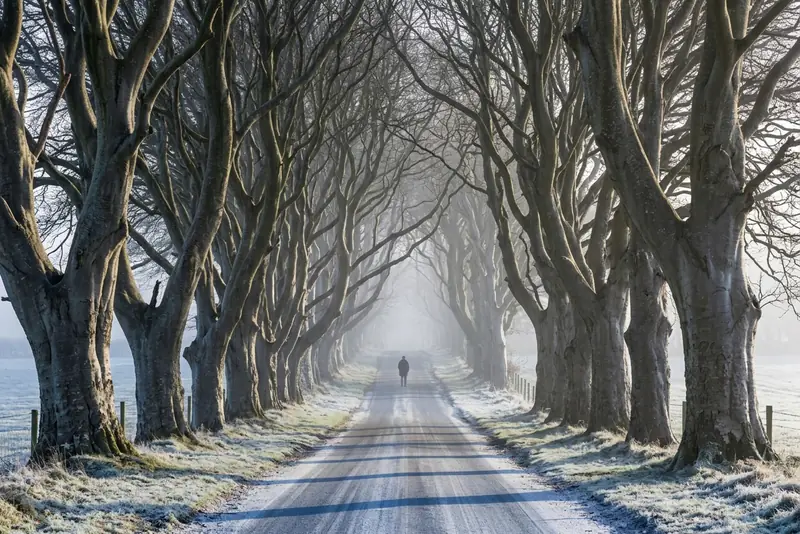
The trees were never meant to live forever, and the attention has not helped. The road was closed to traffic to protect the roots. In November 2023 six trees were felled for safety, and storms in January 2024 and January 2025 brought more down. Fewer than 80 are left, and the people who look after them say plainly that many are near the end of their lives.
Is it still worth going? I think so, but go early. At 8 in the morning the light comes in low through the trunks and you may have the road almost to yourself. By 11 it is full of coach groups. Walk on the road itself, not the verges, and do not climb the trees. They have enough to deal with.
The Studio Tour in Banbridge
The Game of Thrones Studio Tour opened in February 2022 at Linen Mill Studios, where the show was partly filmed. It is a self-guided exhibition, and you need about three hours. There are full sets, including the Great Hall of Winterfell, and rooms of costumes, armor, weapons and props, with a lot of detail on how they were made. Even guests who came for the landscapes tell me it was the highlight.
Tickets are timed and sell out in summer, so book ahead if you go on your own. Everyone parks at a car park in the town and takes a short shuttle bus to the studio; there is no parking at the door. On our tour we book the tickets and plan the morning around your entry time.
The weather
I will not pretend. It rains here, and it can rain in any month. The good news is that showers usually pass quickly, and the coast looks better under a moody sky than under a flat blue one. In spring and summer the days are long: in June it is still light after 10 at night. Temperatures between April and September are usually 55 to 65 F, warmer on a lucky day, colder in the wind on the cliffs.
- Bring a proper waterproof jacket with a hood. Umbrellas die on the Causeway Coast.
- Wear shoes with grip. The rocks at Ballintoy and the paths at Cushendun are slippery when wet.
- Pack a warm layer even in July. You will want it at Mussenden Temple at sunset.
Practical notes for the Causeway Coast
Northern Ireland is part of the UK, so American visitors need a UK Electronic Travel Authorisation before they travel, even if they fly into Dublin and cross the border by road. Apply on the official site or app a few weeks before you go. We use the pound here; the Republic uses the euro.
The Giant's Causeway is not a Game of Thrones location, whatever you read online. Go anyway. It is a few miles from Ballintoy, and standing on those basalt columns is one of the best things you can do in this country.
And when you are at Castle Ward, stand in the farmyard for a minute and picture the banners and the horses. Then walk down to the shore and look across the lough. That view is ours all year, long after the cameras have gone.