Know before you go
Filming location etiquette: how to be a welcome visitor
Private homes, small businesses, residents, photos, live shoots and tipping. Our founder spent eleven years asking neighbors for permission to film. Here is what she learned about the other side.
Photo: Scenes Found
Before I started Scenes Found, I spent eleven years as an assistant location manager on commercials and TV shows in Los Angeles. A lot of that job was knocking on doors. I asked people if we could park forty trucks on their street, film in their driveway at 5 a.m. or borrow their front porch for three days. Most said yes, and many of them told me afterward that the shoot was the easy part. The hard part came later, when the show aired and the fans arrived.
So this is the guide I wish every fan read before setting out. It is also how our tour leaders work, every day, in every country we travel to.
Private homes: leave them alone
This is our firmest rule. When a show films a house, the family who lives there usually gets paid for a few days of disruption. They do not get paid for the years of strangers in the driveway that can follow. Some famous houses have had their fences climbed, their windows looked into and, in Albuquerque, pizzas thrown onto the roof. Several owners have asked the public directly to stay away.
We listen to them. We do not stop at private homes on any of our tours, and we do not drive slowly past them so people can take photos from the van. The Breaking Bad house in Albuquerque, the Sex and the City stoop in New York and the house in Bracknell, west of London, that played the Dursleys' home on Privet Drive in the Harry Potter films are all on that list. If you visit on your own, please do the same. A house that appears on screen is still somebody's home.
Neighbors who live on a film street
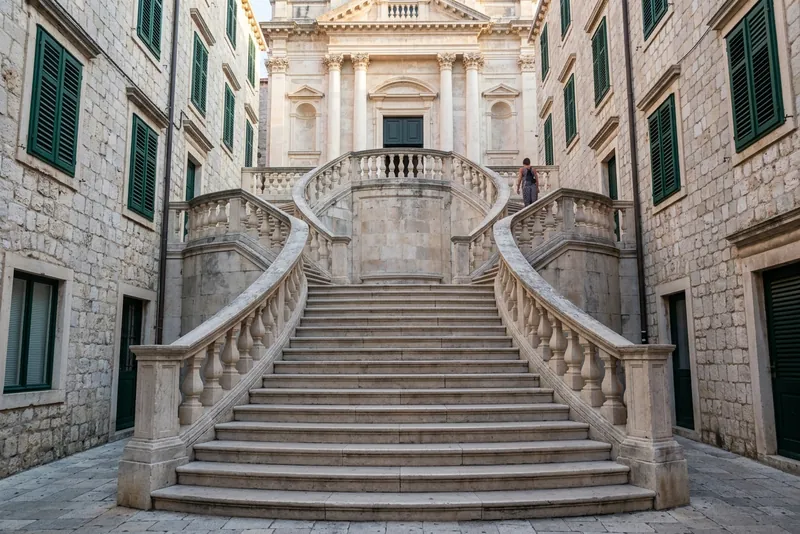
Many locations are on ordinary streets where people live and work. In the old town of Dubrovnik, families still live above the lanes that played King's Landing, and their washing hangs over the steps you climb. In a harbor like Ballintoy there are only a few houses. A few simple habits keep everyone happy:
- Keep your voice down, especially early in the morning and in the evening.
- Do not block driveways, sidewalks or doorways, even for a minute.
- Do not photograph people who live there without asking. A street is public, but the person sitting on their steps is not part of the set.
- If someone asks you to move on, move on, and thank them.
Businesses on screen
Cafes, pubs, restaurants and shops are some of the best locations to visit, because you can go inside. Remember that they still have regular customers and a business to run.
- Buy something. A coffee, a slice of cake, a pint. It is the fairest way to say thank you, and it keeps the place open for the next fans.
- Ask before filming inside, and never film staff without permission.
- Do not take souvenirs that are not for sale. Menus, signs and coasters go missing from famous cafes every week.
- Check opening hours. Many small places close one or two days a week. Our leaders plan around this; on your own, call ahead.
Taking photos at filming locations
Take as many as you like in public places. A few things to keep in mind:
- Recreating a scene is part of the fun. Do it on the sidewalk, not in the traffic lane. On the coast roads of Iceland and Northern Ireland, stop only where there is a proper pull-out, never on the road itself.
- Tripods and drones often need permits in parks, old towns and heritage sites, and many ban drones outright. If you want to fly one, ask us before the trip and we will tell you the local rules.
- Museums and studio tours set their own rules. Some stages ban photos completely. Follow the staff, not the people online who sneaked a shot.
When you find an active shoot
In Los Angeles, New York, London, Belfast and Dubrovnik, you may well walk into a real production. Look for white trucks, orange cones, yellow signs with code names and people in black with radios. My old colleagues will thank you for these points:
- Stay behind the line where a production assistant asks you to stand. They are usually young, tired and polite. Be polite back.
- When you hear "rolling" or "quiet", stop talking and stand still until you hear "cut".
- Photos are usually fine from a distance between takes, but turn off the flash and ask if you are unsure. Posting set photos online can get people in trouble.
- Never walk onto a set or into a lit area, and do not approach actors while they are working.
Our leaders will spot a shoot before you do and tell you where to stand. We have no connection with any production, so we are visitors like everyone else.
Tipping your guides
Tipping customs change from country to country, and tips are not included in our tour price. In the United States tips are part of how guides and drivers are paid; in most of Europe they are smaller and less expected, but still welcome. People often ask what is normal, so here is what our travelers usually do:
- Day tours: about 10 percent of the tour price for the tour leader in Europe, 15 to 20 percent in the United States, given at the end of the day.
- Multi-day tours: about $8 to $15 per person per day for the tour leader and $4 to $8 per person per day for the driver, usually in an envelope on the last day, in dollars or local currency.
- Local guides such as a site guide at Petra or a Bedouin driver in Wadi Rum: a few dollars or euros per person at the end of their part.
Tipping is always your choice. If something was not right, tell us. We would much rather fix it.
Why location etiquette matters
Every filming location depends on goodwill. Towns, owners and businesses that have a good experience with productions say yes to the next one, and towns that have a good experience with fans keep welcoming them. When you visit kindly, you help keep the places you love open for the next person who comes looking for them.